The Bar
The current collection.
The great speakeasies of the 1920s gave the world the Bee's Knees, the Last Word, the Sidecar, and the Charlie Chaplin — cocktails born of necessity, refined by repetition, and still standing a century later. We've taken that as the benchmark and added a few of our own to the canon.
Every drink here is either a house original or a deliberate interpretation of something classical. Some have names. Some are better off without one. All of them have been consumed by people who had work the next morning and ordered another anyway.
The Lamp Standard
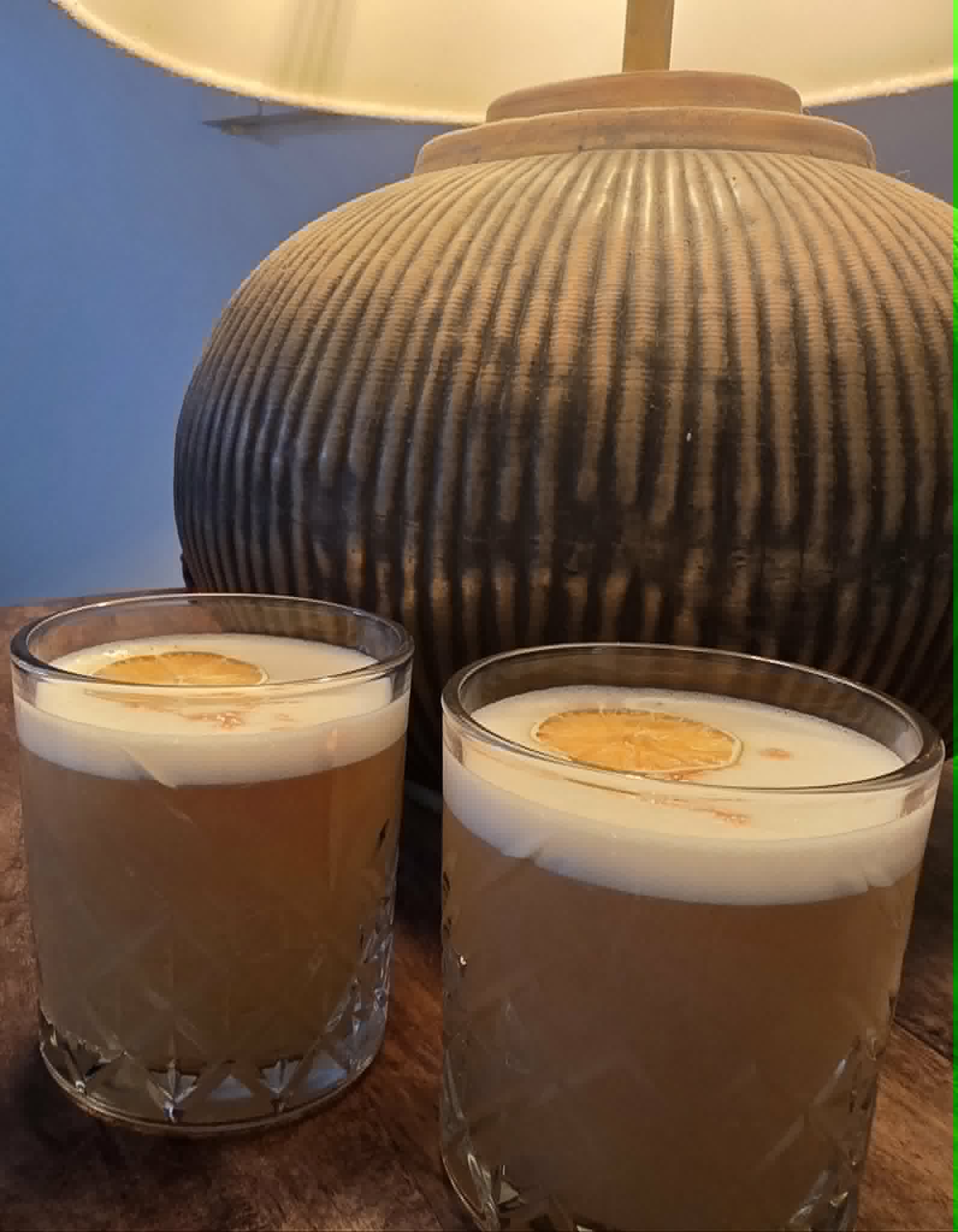
Two whiskey sours in heavy crystal tumblers — fat foam caps, dried orange floated on top, that lamp doing its thing in the background. Bourbon, lemon, egg white, simple syrup. Made enough times it has its own muscle memory. The benchmark against which every other drink in this house is measured.
Whiskey Sour · House Pour · The Lamp Again
The Quiet One
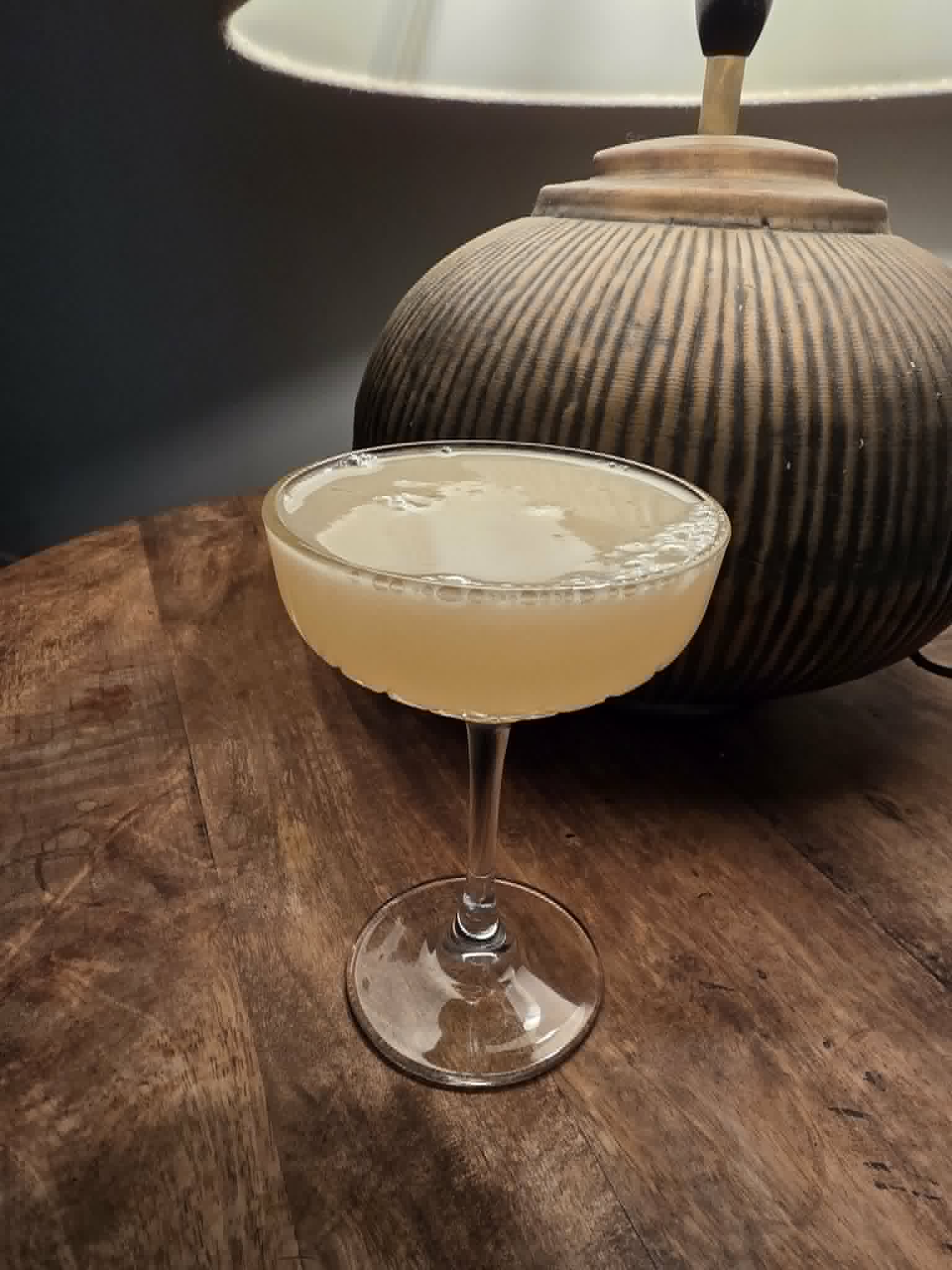
A pale gold daiquiri in a coupe — rum, lime, sugar, correctly balanced, served cold. No garnish. No drama. The daiquiri was Ernest Hemingway's drink of choice, which either makes it literary or deeply predictable depending on your view of Hemingway. Excellent either way.
Classic Daiquiri · Rum · No Apology
The Lychee Incident
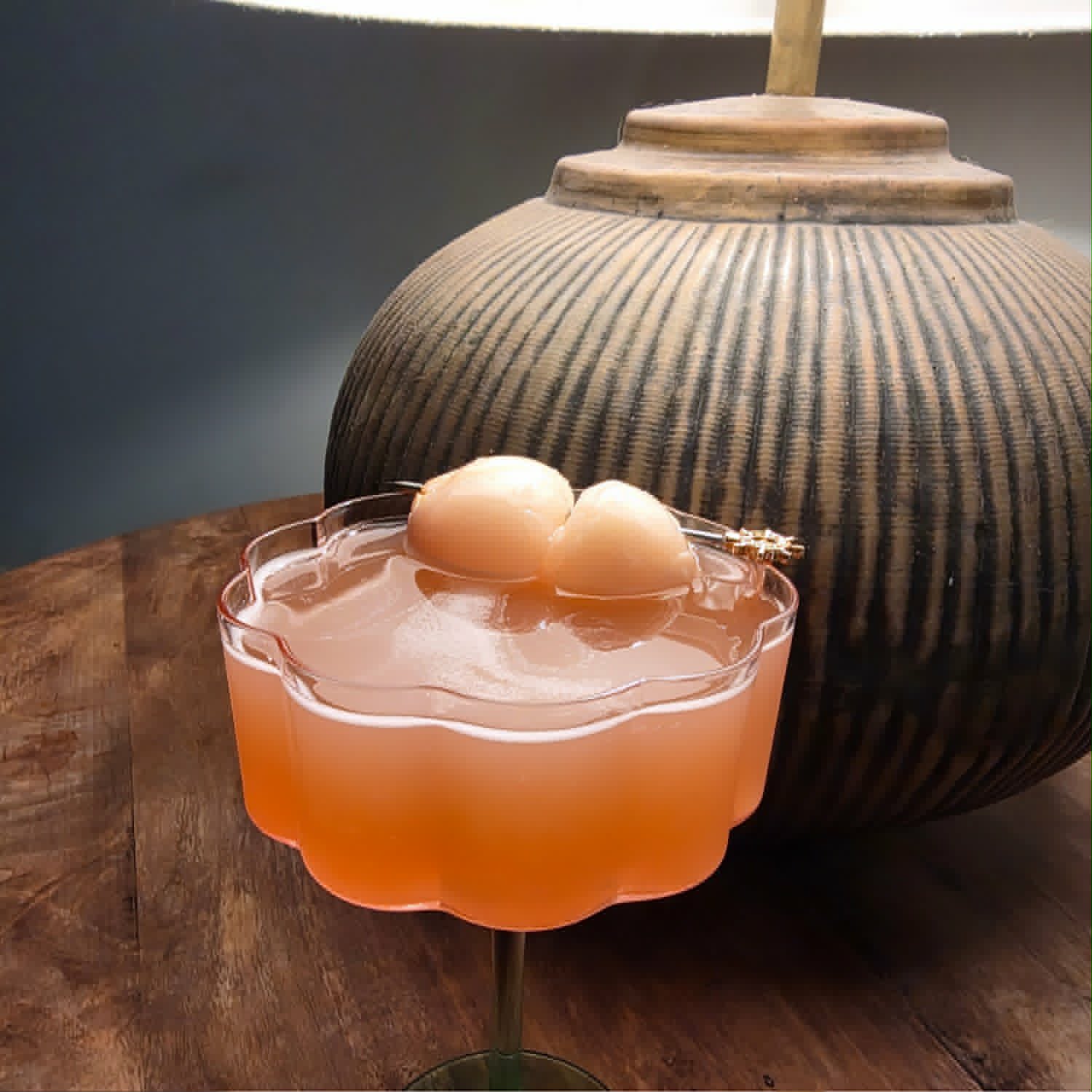
Blush-orange in a scalloped coupe — vodka, lychee liqueur, a splash of something pink, two lychees speared on a gold cocktail pin like they're being formally charged. Nobody could agree on exactly what was in it. Nobody stopped drinking it either. The investigation remains open.
Lychee Sour · Vodka · Inconclusive
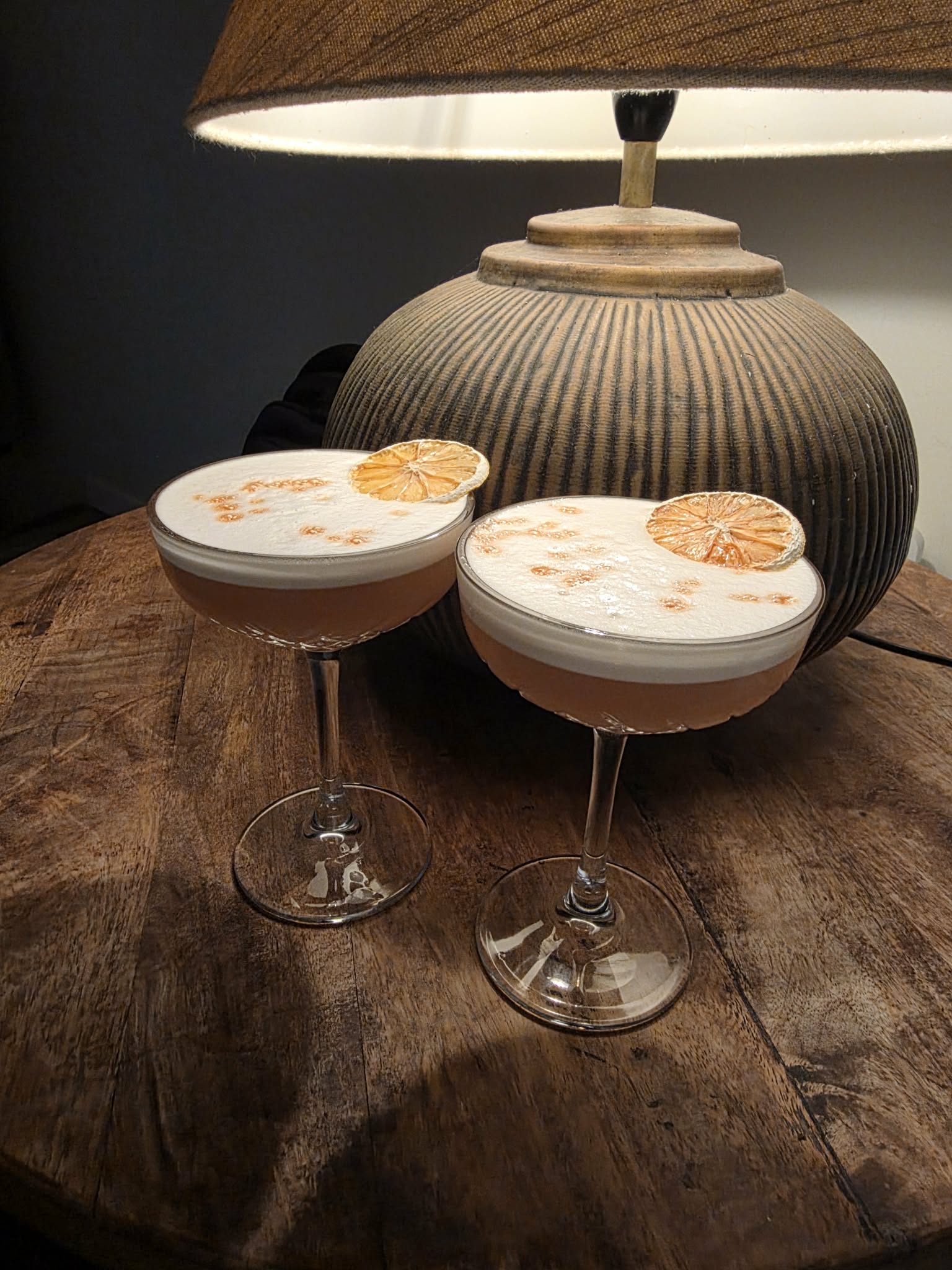
The Charlie Chaplin
A genuine 1920s speakeasy classic, created at the Waldorf-Astoria in New York and named for the silent film star who drank in the era it was born. Sloe gin, apricot brandy, fresh lime — served here in a coupe with cinnamon-dusted foam and dried citrus. Still funny. Still perfectly balanced. Still ordering another.
Charlie Chaplin · 1920s Original · Sloe Gin
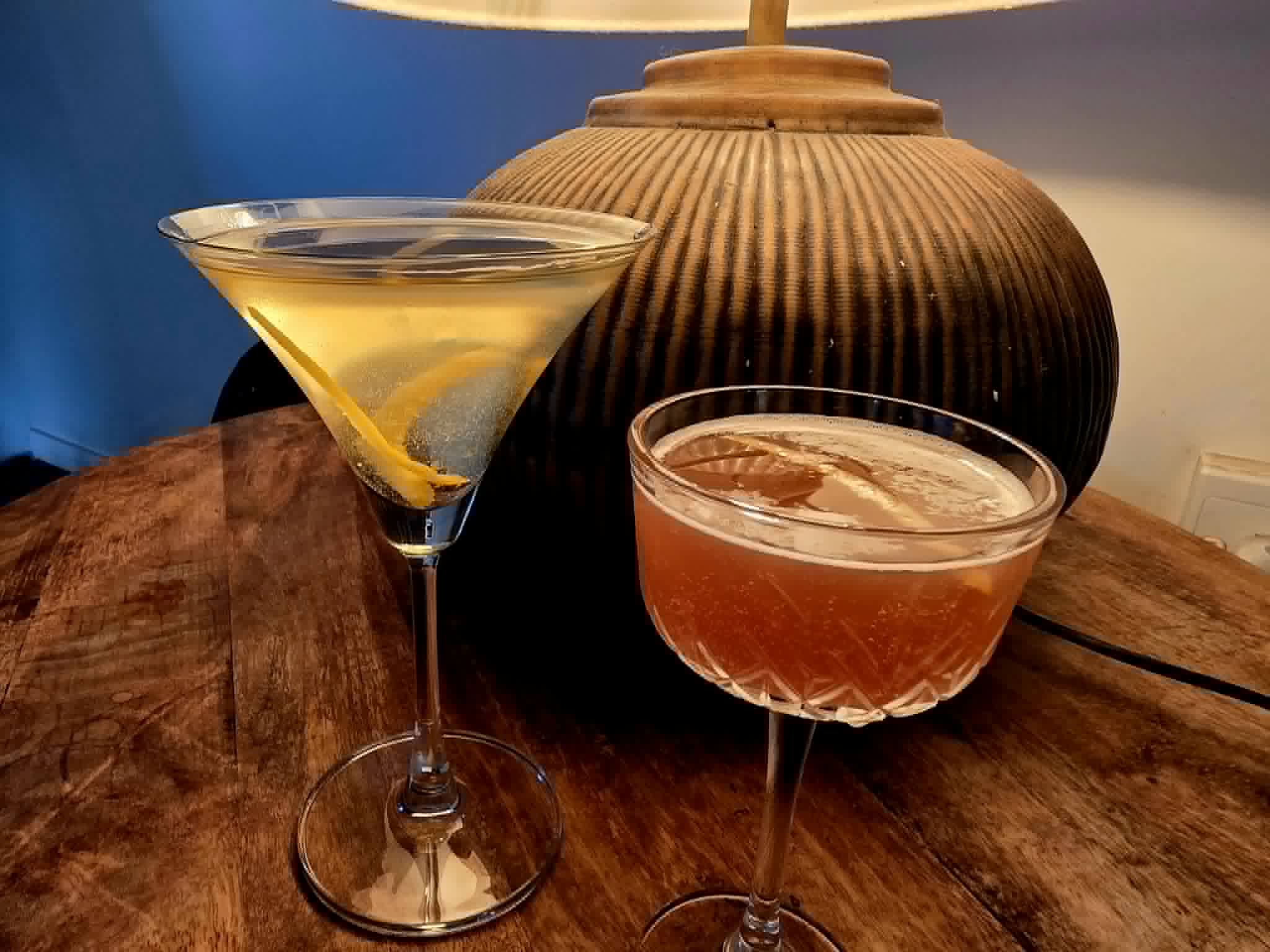
The Pair
A clean martini with lemon twist and a Campari Express in a crystal coupe on the same table. The most honest photo in the collection — two people, two very different ideas about the evening. Neither compromised. Both correct. The mark of a good bar is that everyone gets what they actually want.
Martini + Campari Express · No Consensus Required
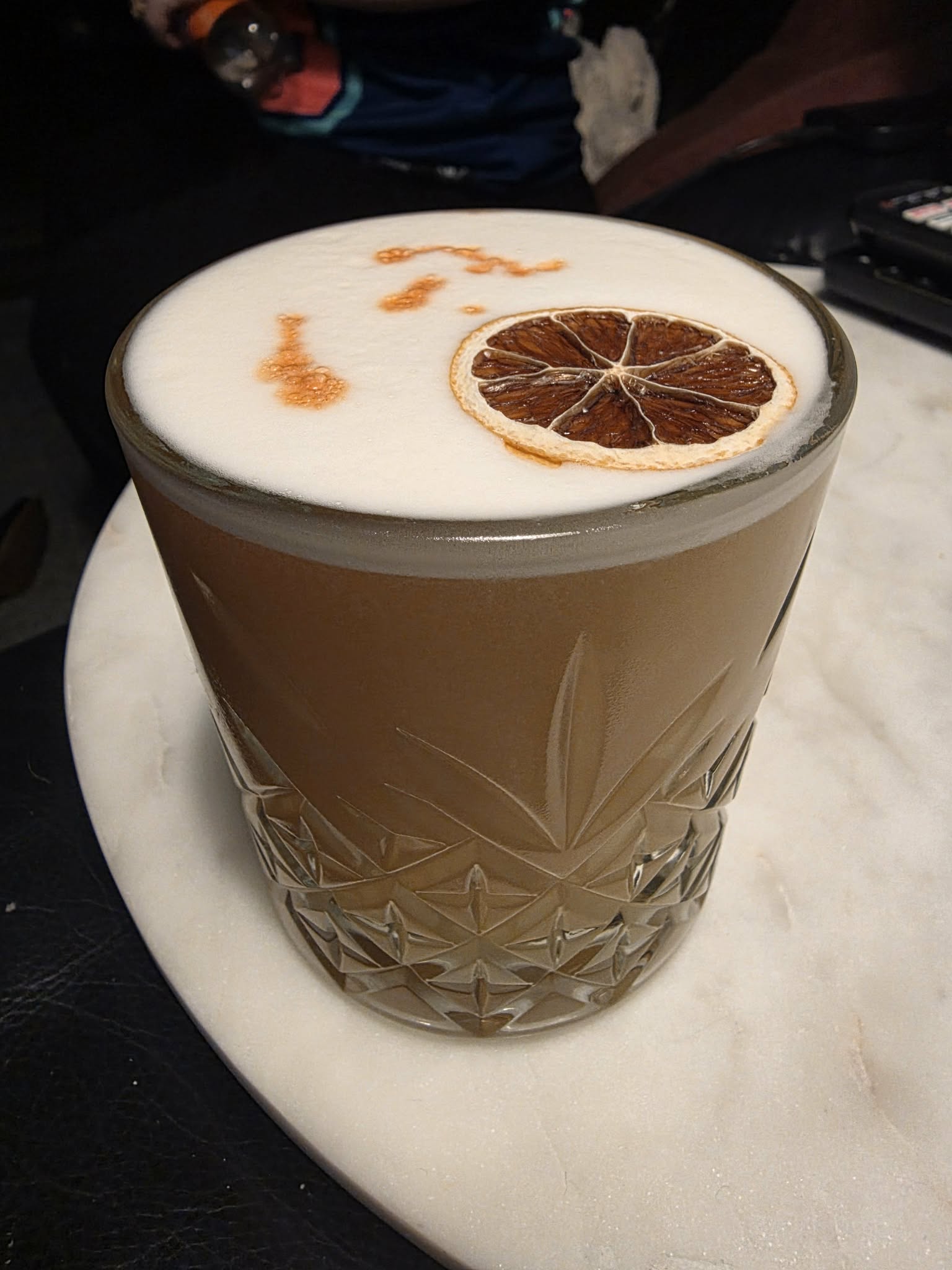
The One They Ordered at the Bar
Spotted in the wild somewhere in Auckland — a whiskey sour in a heavy pineapple-cut crystal tumbler on a marble coaster, bitters art on the foam, dried orange doing its best. This wasn't made at home. Someone photographed it as field research. The bar has since been reverse-engineered. Imitation being the sincerest form of flattery and all that.
Whiskey Sour · Field Research · Replicated
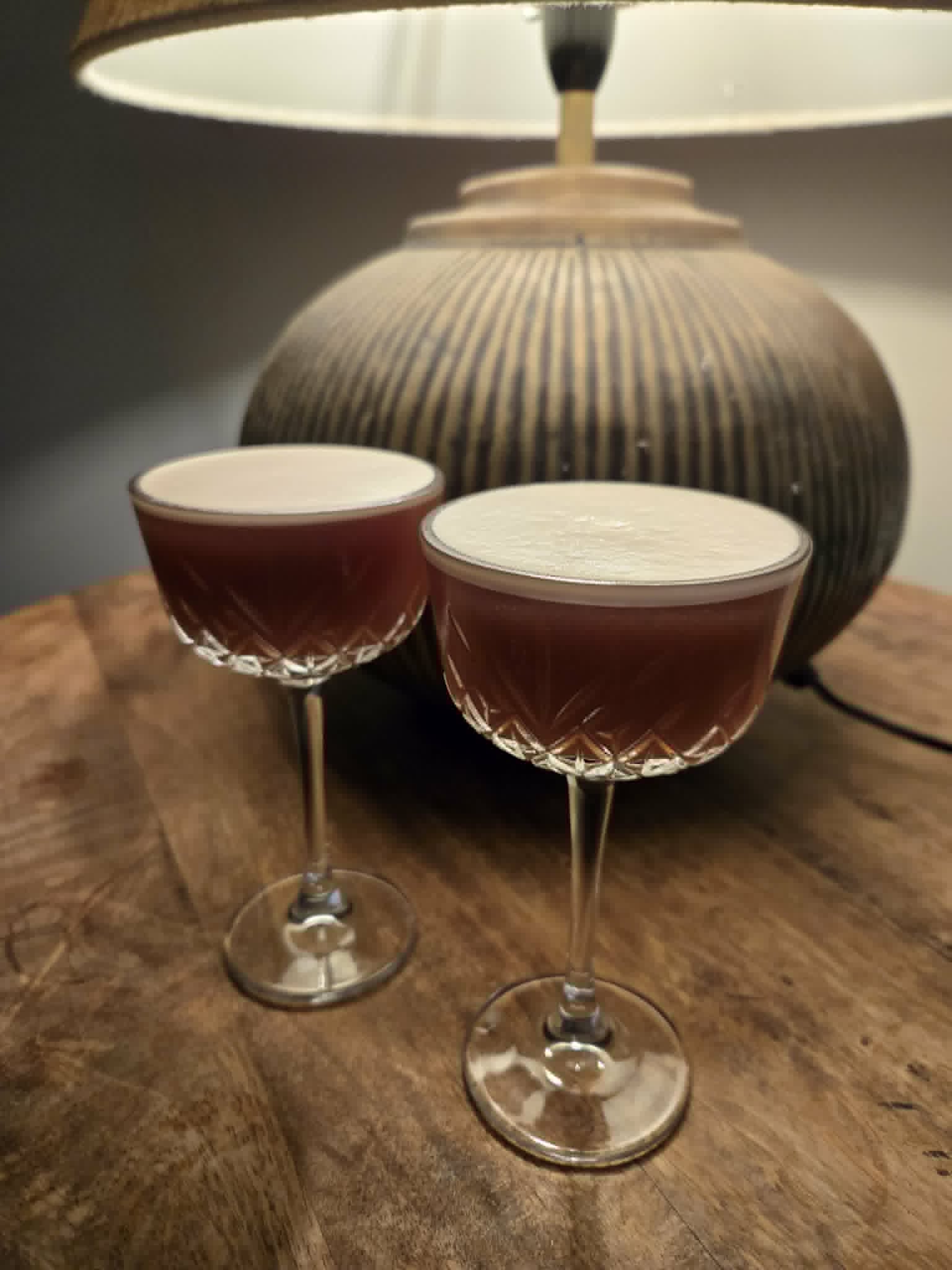
Standard Issue
Two dark red whiskey sours in crystal coupes, foam tops, no garnish, that lamp in the background again. No drama. No occasion. Just the house sour on a Tuesday when nobody was trying to impress anyone. Which is almost always when it tastes best.
Whiskey Sour · Egg White · No Occasion Required
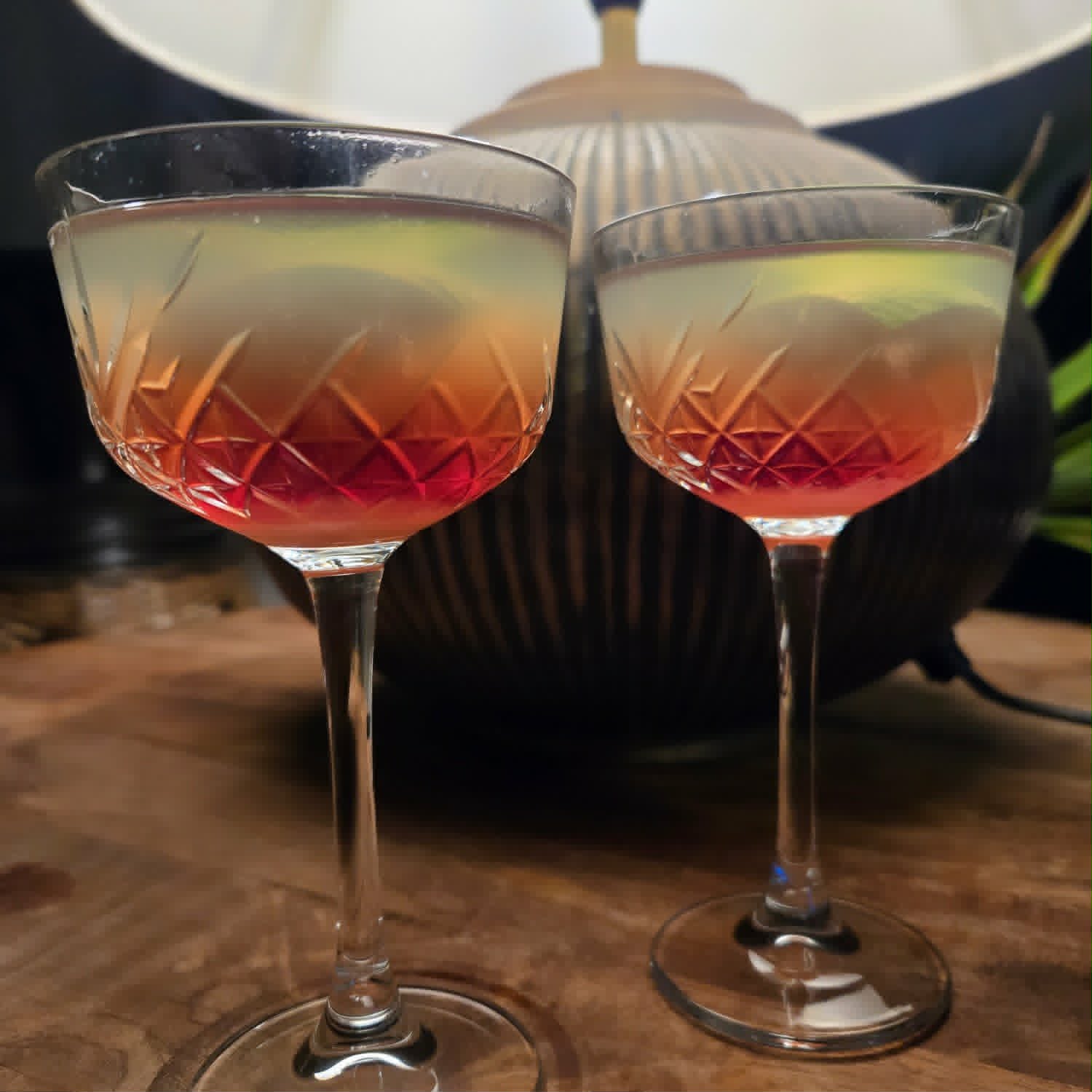
Sunset Clause
Two layered coupes — deep grenadine red at the base bleeding through amber tequila to pale citrus-green at the rim. A tequila sunrise, served up instead of on ice, because some classics deserve better glassware than they usually get. The gradient took three attempts to get right. Nobody complained during the process.
Tequila Sunrise · Grenadine · Served Up
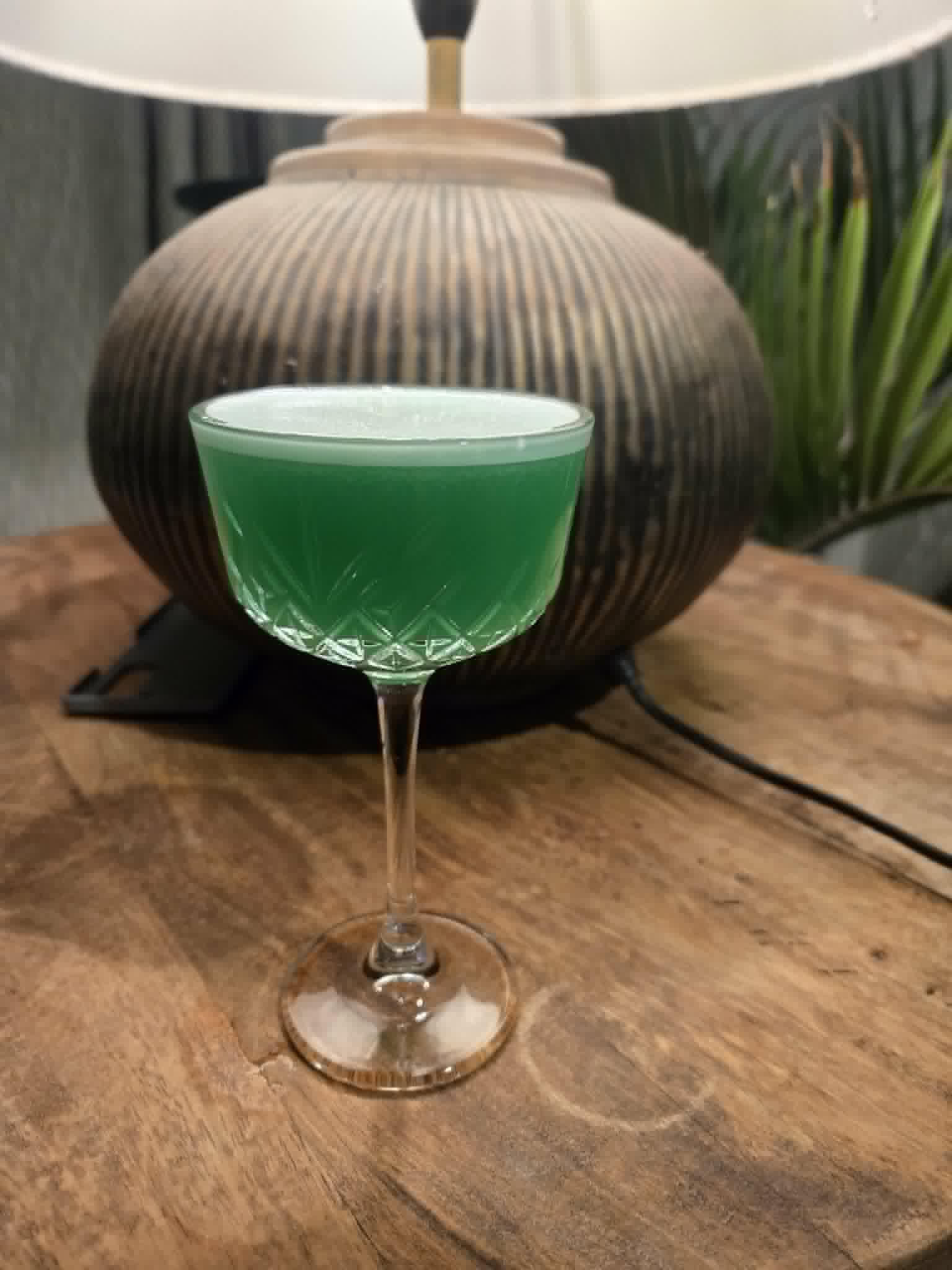
Solo Mission
One Jade Slipper, alone, in front of the lamp. Lemon juice, blue curaçao, Midori — that colour is not a filter. This is the drink you make when everyone else wants something else and you've decided to stop compromising.
Jade Slipper · Lemon · Blue Curaçao · Midori
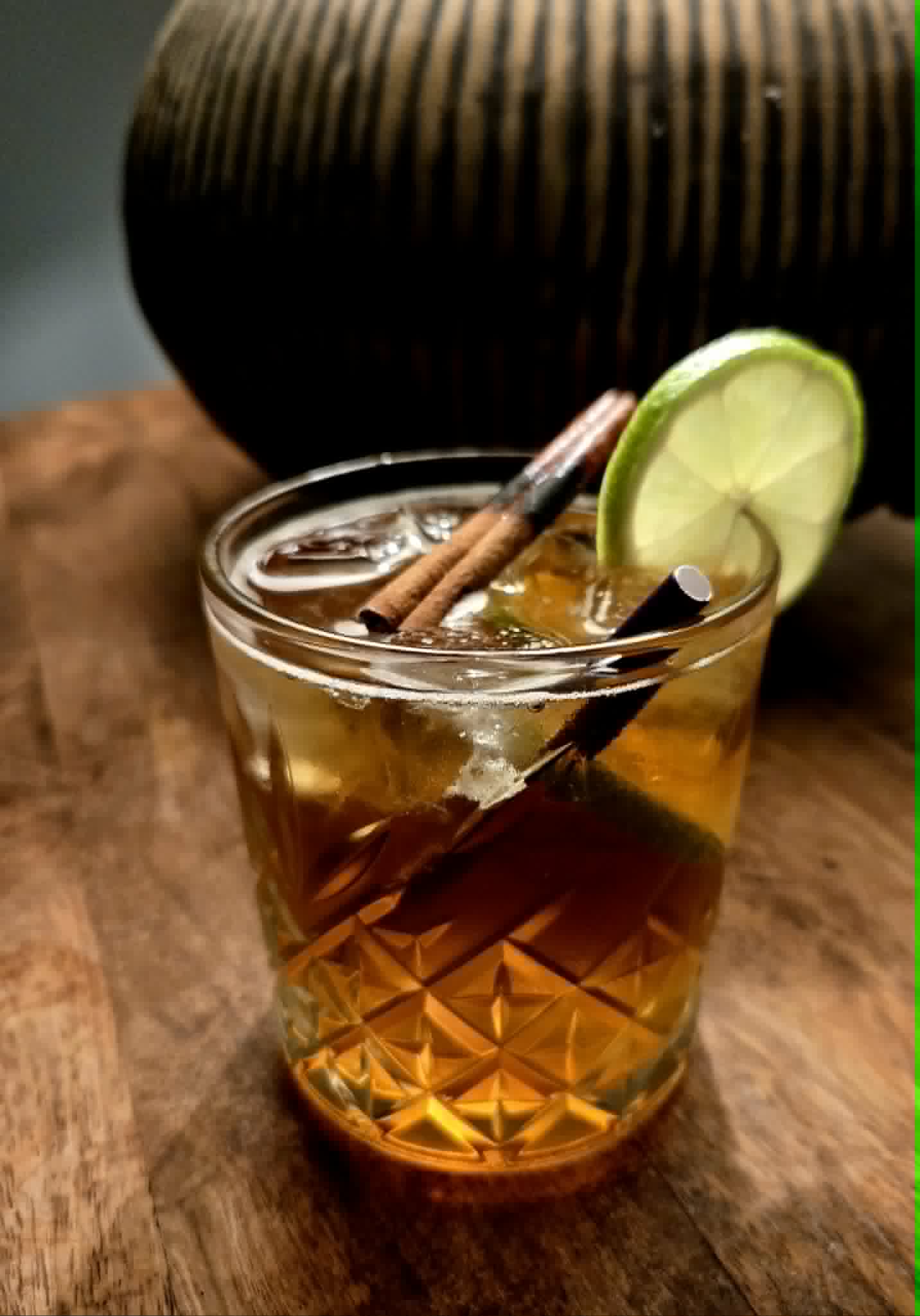
The Negotiator
Dark & Stormy in a heavy crystal rocks glass — aged dark rum, ginger beer, fresh lime, two cinnamon sticks that weren't in the original plan but turned out to be an excellent call. The Dark & Stormy is technically trademarked by a Bermudian rum company, which is the most aggressively corporate thing that has ever happened to a cocktail. We're doing it anyway.
Dark & Stormy · Rum · Ginger · Cinnamon
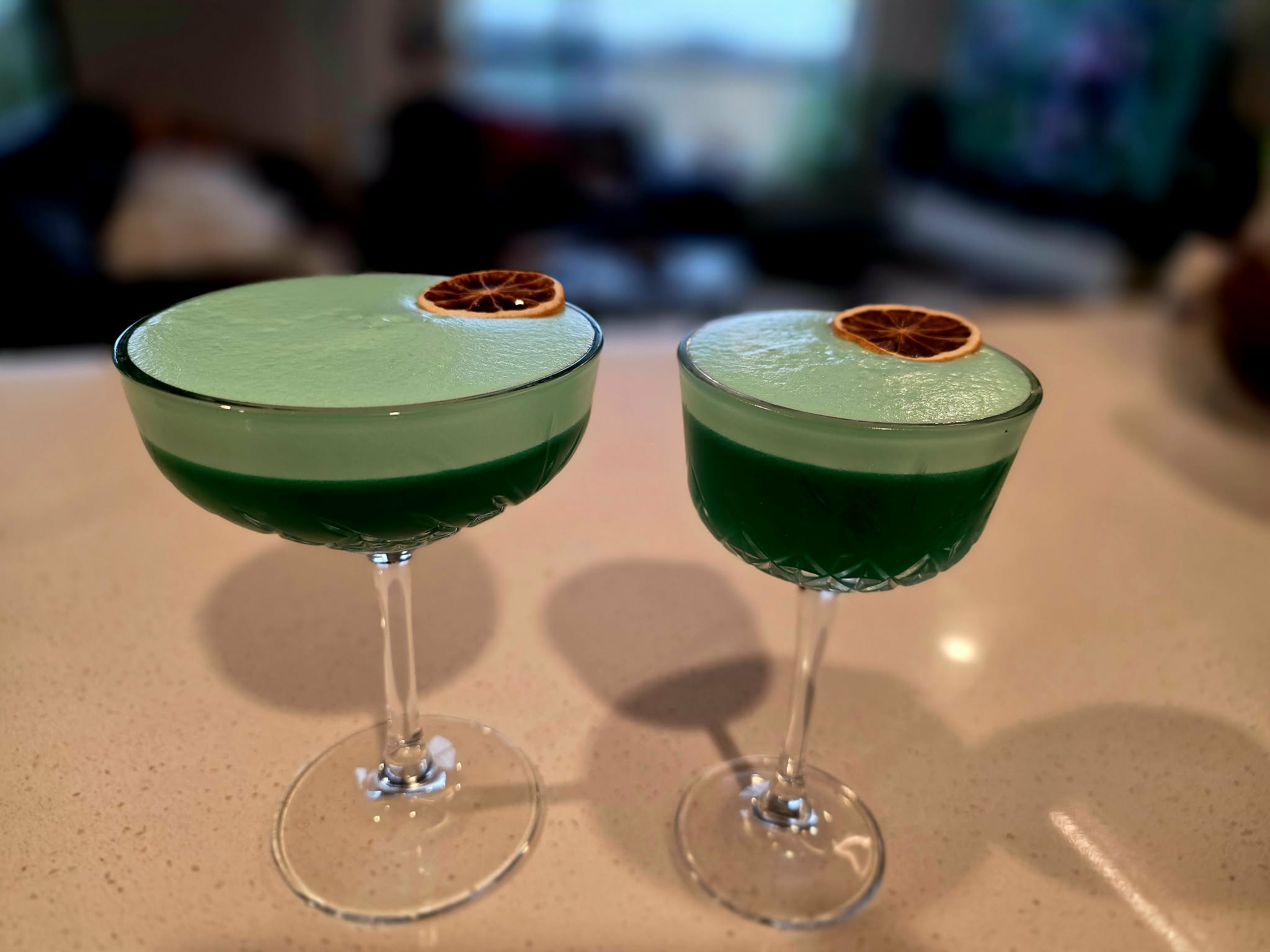
Green Flag
Two Jade Slippers — forest green beneath a pale foam cap, dried citrus on top, shot in actual daylight on the kitchen bench like responsible adults. This version was refined by Tristan in 2021 and has not been improved upon since. The one you'd serve to someone you're trying to impress.
Jade Slipper · Refined 2021 · NZ Original · Foam
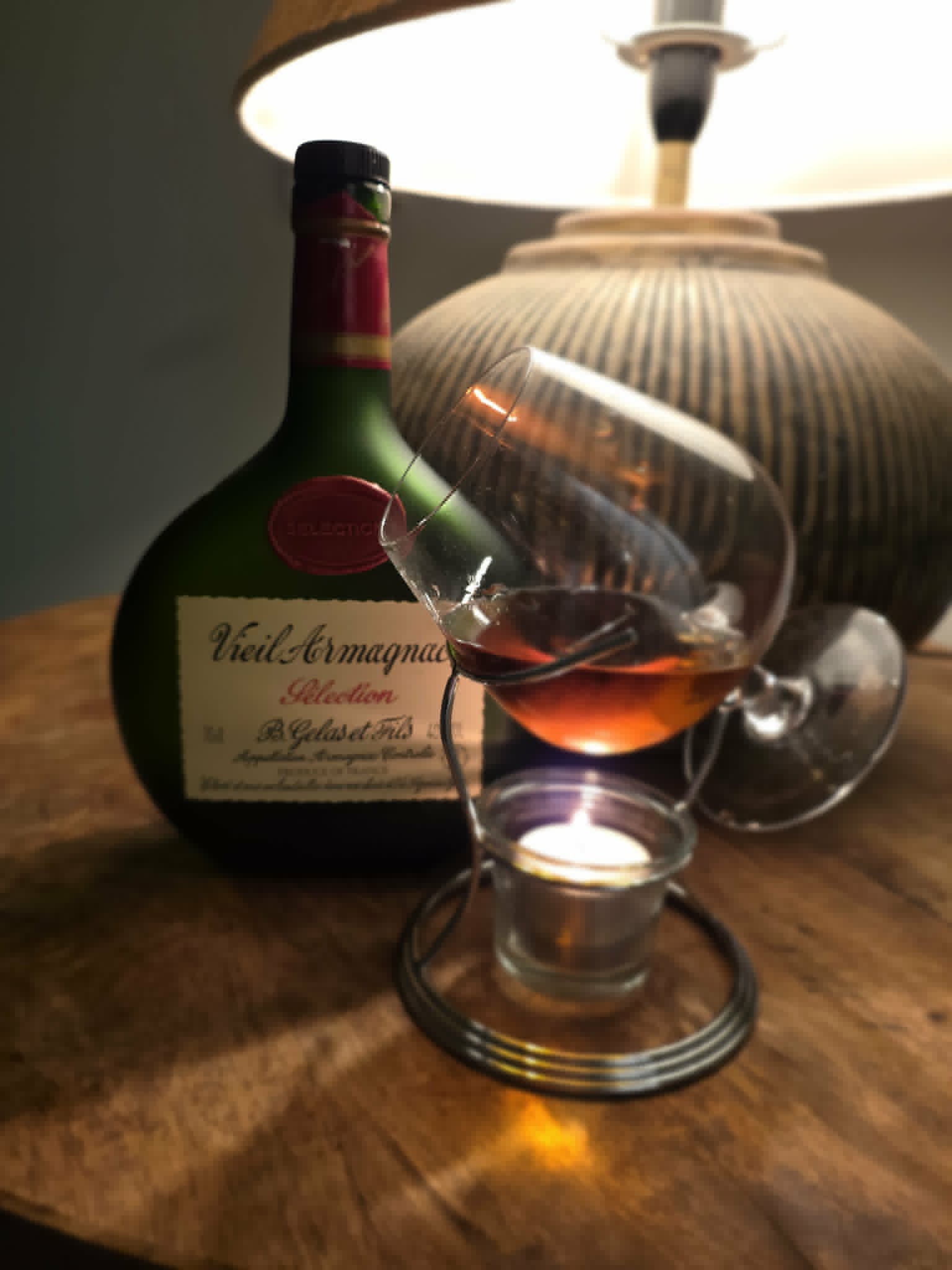
After Hours
Vieil Armagnac — B. Gelas et Fils, Sélection — warmed in a balloon glass over a tealight, the bottle beside it, the lamp behind it. Not a cocktail. Not trying to be. Armagnac predates Cognac by nearly a century and remains France's best-kept open secret. The original speakeasy spirit was brandy before whiskey took over. This is the reminder of that fact, poured neat and left alone.
Vieil Armagnac · Neat · Non-Negotiable
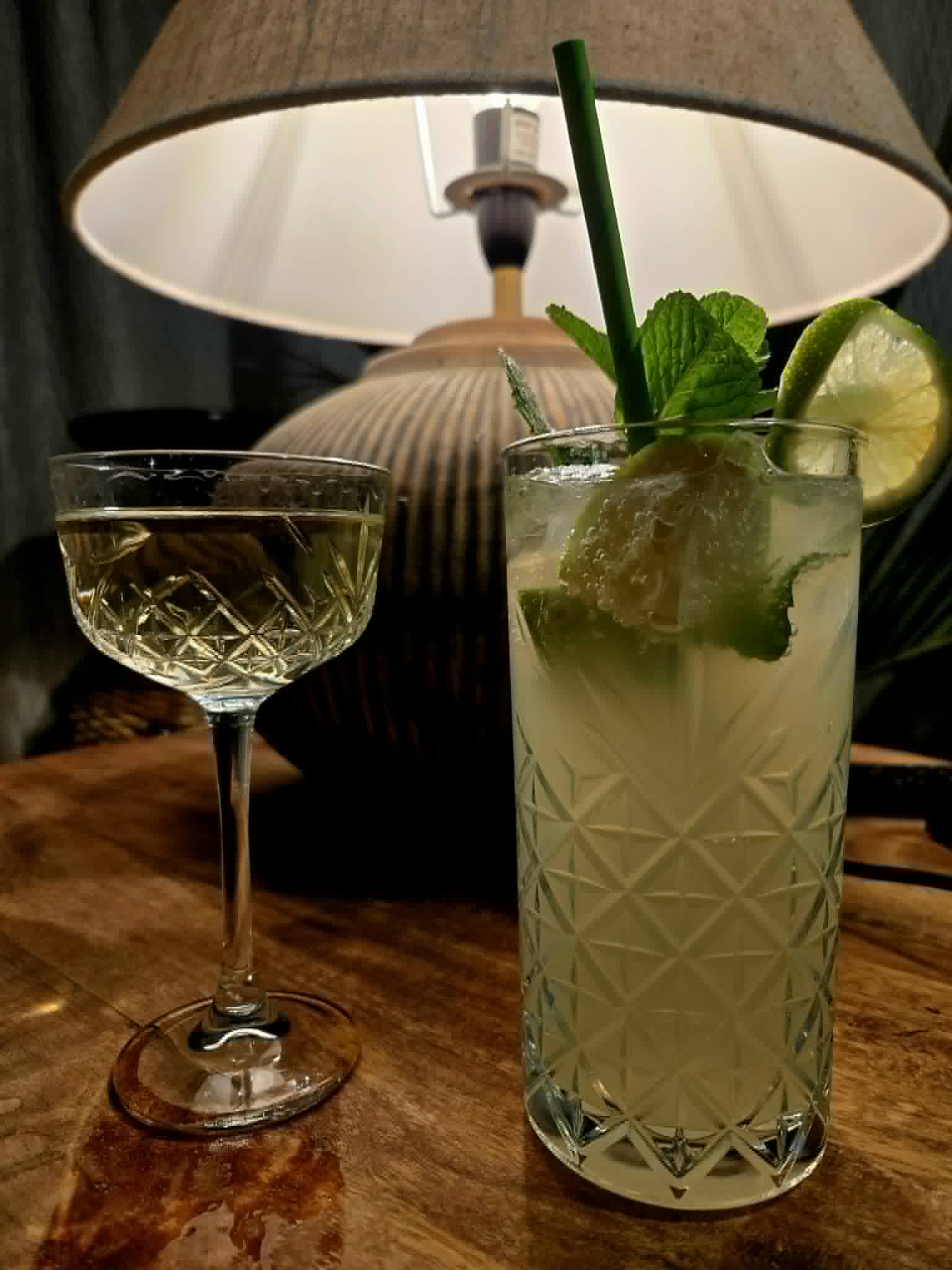
Negotiations
A crystal coupe and a tall mojito on the same wooden table, lamp lit behind them. One person wanted something short, stirred, and cold. Someone else wanted mint, lime, and a straw. Both got what they wanted, which is rarer than it sounds. The mojito was popularised in 1920s Havana by the same crowd who drank through Prohibition across the water. It belongs here.
Gin Martini · Mojito · Diplomatic Resolution